Pacific White Snook
Centropomus viridisA large Eastern Pacific snook found in bays, estuaries and lower freshwater reaches. It has a dark lateral line and a relatively slender body.
Jaco Costa Rica Fishing Charters

Target hard-striking Pacific snook around river mouths, surf lines, estuaries and bait-rich coastal water. Success depends on matching tide, water color and bait movement with the right live bait or lure presentation.
Snook have an elongated silver body, a prominent dark lateral line and a large mouth designed to inhale bait. They wait where current, waves or changing salinity concentrate small fish and shrimp, then strike with a quick burst.
After the bite, snook may jump, shake their head or run toward nearby cover. Their sharp gill plates and abrasive habitat make leader selection, steady pressure and careful handling important.
Costa Rica’s Pacific coast supports several members of the snook family. Exact identification matters because similar silver fish can differ in size, fin color and body proportions.
A large Eastern Pacific snook found in bays, estuaries and lower freshwater reaches. It has a dark lateral line and a relatively slender body.
A powerful Pacific species associated with bays, estuaries and lower rivers, with a black lateral line and darker fins.
Also called bigeye snook, a smaller species inhabiting bays, estuaries, mangroves and lower freshwater streams.
Also called little snook, a smaller inshore species recognized by yellow on the anal and pelvic fins.

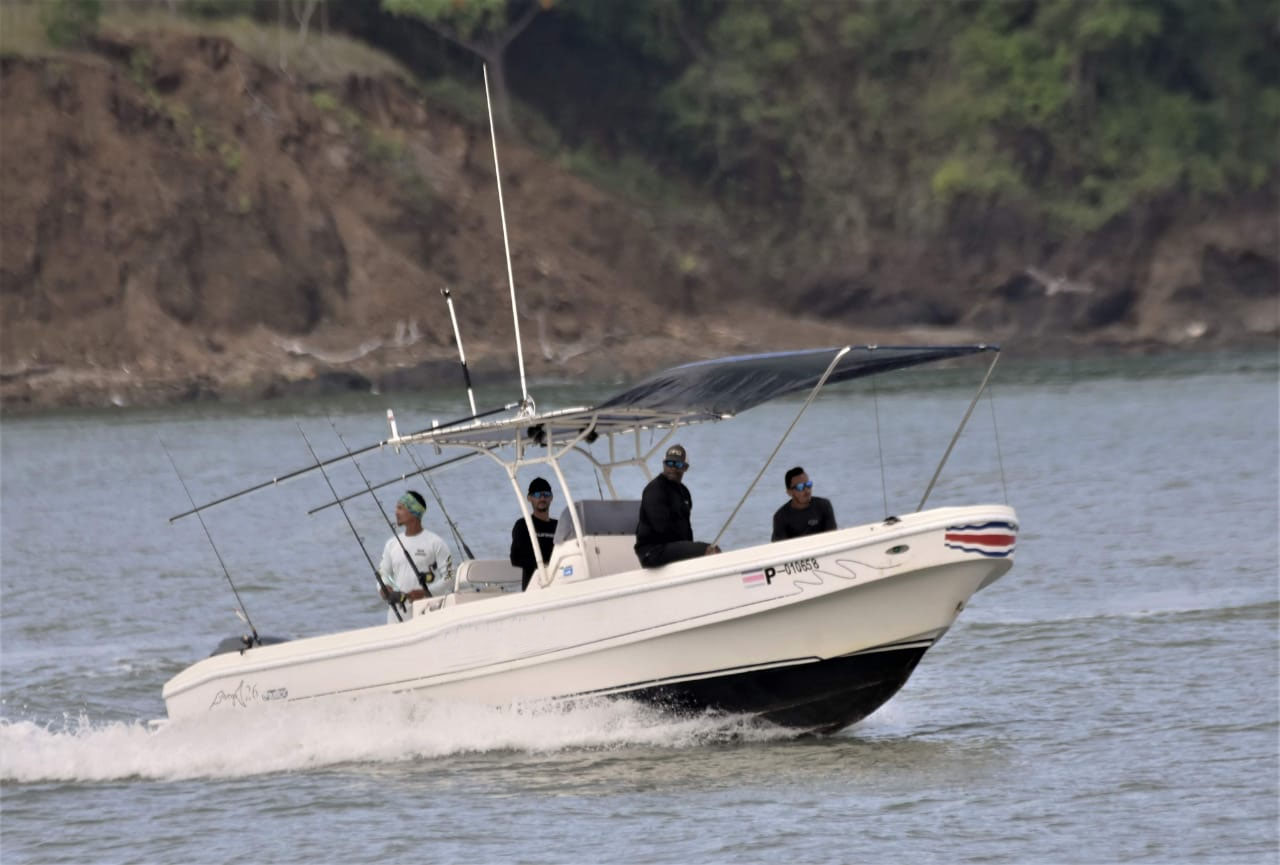
Snook are often caught by working a precise edge rather than covering open water randomly. The captain chooses the approach according to waves, tide, water clarity and bait.
Mullet, sardines or other locally available baitfish can be drifted, slow-trolled or free-lined near productive edges.
Suspending minnows, diving plugs and topwater lures imitate bait moving across current or along the surf.
Jig heads and soft baits reach deeper channels, river-mouth drop-offs and fish holding near the bottom.
Streamers can be effective with the right casting space, but anglers should request a fly-friendly boat and bring suitable tackle.
Snook can be present throughout the year, but July through November is often a stronger Central Pacific planning period. Rain can increase river flow, change salinity and carry food toward river mouths and beaches.
Heavy runoff can also make an area too dirty or unsafe. Recent water color, bait, swell and river conditions are more useful than assuming every rainy-season day will fish the same.
Ask About Your DatesFreshwater, saltwater, current and food meet at river mouths, creating changing edges that snook use to ambush prey.
Snook may feed in troughs, cuts and foamy water where waves disorient baitfish and crustaceans.
Protected brackish habitat provides bait and cover, especially for smaller snook and juvenile fish.
There is no single tide that is best at every river mouth or beach. The crew considers how water movement positions bait, whether the entrance is safe and where cleaner water meets runoff.
Current can activate bait and create edges where snook wait to feed.
A defined transition between dirty and cleaner water can be more useful than fishing featureless runoff.
Breaking waves at river mouths may prevent close approaches even when the fishing looks promising.
A practical choice when a productive beach, river mouth or estuary is reasonably close to the departure area.
Gives the captain time to check several river mouths, beaches or tide stages and change methods.
A full day can combine river-mouth or beach snook fishing with live-bait work near rocks for roosterfish.
Yes. Snook are possible throughout the year, with July through November often considered a stronger general period on the Central Pacific.
The productive tide depends on the individual river mouth, beach, current and swell. Moving water and a useful color edge are often more important than a universal tide rule.
Crews may use mullet, sardines, shrimp or other locally available bait. Plugs, jigs, soft plastics and flies can also be effective.
Yes. Beginners should listen closely after the strike because snook may jump, shake their head or run toward structure, and their gill plates can abrade light leader.
Yes, but request a casting-friendly boat and bring appropriate fly rods, reels, lines and flies. Most general charters do not supply specialized fly equipment.
Some legal snook may be retained after correct identification and according to current regulations and the captain’s judgment. Never assume every fish can be kept.
No. Tide, runoff, swell, bait and water clarity can change snook fishing quickly. The crew will choose the most practical available area and method.
Send your preferred date, number of anglers, hotel and experience level. We will compare practical boats and explain current rates, capacity, departure point and inclusions.
Mention “snook,” your preferred trip length and whether you want conventional tackle, fly fishing or a multi-species inshore charter.