Explosive strikes, blistering runs and razor-sharp teeth make wahoo one of the Pacific’s most exciting trolling catches. Learn when to target them, how crews prepare and which charter setup suits a dedicated offshore search.
Wahoo (Acanthocybium solandri) have long, narrow bodies, metallic blue bars and a mouth filled with extremely sharp teeth. Their shape allows them to accelerate rapidly and strike moving bait with little warning.
The first run can remove line at impressive speed. Because wahoo may cut ordinary monofilament and change direction abruptly, the crew prepares leaders, drags and lure positions before entering likely water.
Wahoo are less predictable than some seasonal billfish. A recent local report is more useful than any promise based only on the calendar.
Wahoo fishing in Costa Rica
Tackle and techniques
How crews turn a sudden strike into a landed fish
High-Speed Trolling
Weighted lures may be pulled faster than a normal sailfish spread when sea conditions and the boat allow.
Planers & Deep Lines
Planers, downriggers or weighted systems position bait and lures below the surface along deeper edges.
Wire or Cable Leaders
A short bite leader helps prevent a wahoo’s teeth from cutting the connection during the strike.
Rigged Ballyhoo
Carefully prepared natural bait can be trolled behind skirts or other attractors at suitable speed.
Heavy-Duty Lures
Strong hooks and durable plugs or skirts must tolerate violent strikes and high trolling pressure.
Controlled Drag
Correct drag pressure protects tackle during the initial run while maintaining enough force to set the hook.
Seasonal planning
When is wahoo fishing best near Jaco?
Wahoo may appear during any month, but May through October is a useful planning range for the Pacific coast. Green-season currents, floating debris and concentrated bait can create mixed pelagic opportunities.
August through October can be especially interesting, but wahoo remain unpredictable. The captain should review current reports, water conditions and the distance to productive structure before recommending a boat.
A landed wahoo remains dangerous. Guests should keep hands away from the mouth, leader and hooks and follow the mate’s instructions throughout landing and processing.
Never grab the leader
Stay clear of the fish’s head
Let the crew remove hooks
Keep the cockpit organized
Food Quality
Wahoo are valued for firm, mild meat. If retention is legal and appropriate, prompt bleeding, icing and clean processing protect the quality of the catch.
Keep only a practical amount
Ice retained fish quickly
Transport fillets cold
Confirm restaurant preparation policies
Wahoo questions
Wahoo fishing FAQ
What is the best wahoo season near Jaco?
Wahoo are possible year-round, but May through October generally offers stronger Pacific opportunity. August through October can be particularly interesting depending on currents and bait.
How fast do boats troll for wahoo?
Some high-speed spreads run around 10–14 knots when boat capability and sea conditions allow. Other presentations are trolled more slowly using planers or weighted lines.
Why are wire leaders used?
Wahoo have sharp teeth that can cut ordinary monofilament. A short wire or cable bite leader protects the connection near the lure or bait.
Can we target only wahoo?
The crew can prepare a wahoo-oriented spread, but no species can be guaranteed. Dorado, tuna and billfish may appear in the same offshore areas.
Can we keep a wahoo?
Wahoo may generally be retained as food when current rules and the captain allow. Keep only what can be used and ensure the fish is iced promptly.
Is wahoo fishing suitable for beginners?
Yes, provided guests follow the captain and mate’s directions. The crew manages the trolling spread, but everyone must respect the fish’s sharp teeth and sudden movement.
Plan the offshore day
Check wahoo charter availability
Send your preferred date, number of anglers, hotel and experience level. We will compare offshore boats and explain recent conditions, current rates and inclusions.

 Wahoo fishing in Costa Rica
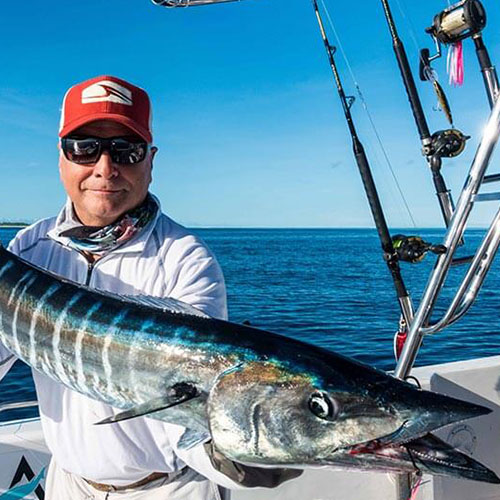 Wahoo fishing in Costa Rica