Pacific Red Snapper
Lutjanus peruA reddish-pink snapper generally associated with rocky and sandy offshore bottoms. It is one of the species anglers may collectively call red snapper.
Jaco Costa Rica Fishing Charters

Fish rocky reefs, ledges and coastal structure for hard-fighting Pacific snapper. From spotted rose snapper to powerful Pacific dog snapper, each species demands quick reactions before it reaches cover.
Snapper are ambush predators with strong jaws and an instinct to return to reef or rock as soon as they are hooked. That first run is critical: the angler must gain line while the captain controls the boat and the crew keeps the tackle clear.
The Central Pacific offers several snapper species in shallow bays, rocky coastline and deeper structure. The exact species, depth and method change with tide, bait, current and the area selected by the captain.
“Red snapper” is often used loosely. The Pacific coast has its own snapper species; it is not the Northern red snapper (Lutjanus campechanus) associated with the western Atlantic and Gulf of Mexico.
A reddish-pink snapper generally associated with rocky and sandy offshore bottoms. It is one of the species anglers may collectively call red snapper.
Also called Pacific cubera locally, this large, powerful reef snapper is built to reach rocky shelter immediately after the strike.
Recognized by a dark spot high on the side. It occurs in coastal bays and over deeper fishing grounds.
An Eastern Pacific reef species found over hard bottom and known for a determined, structure-seeking fight.

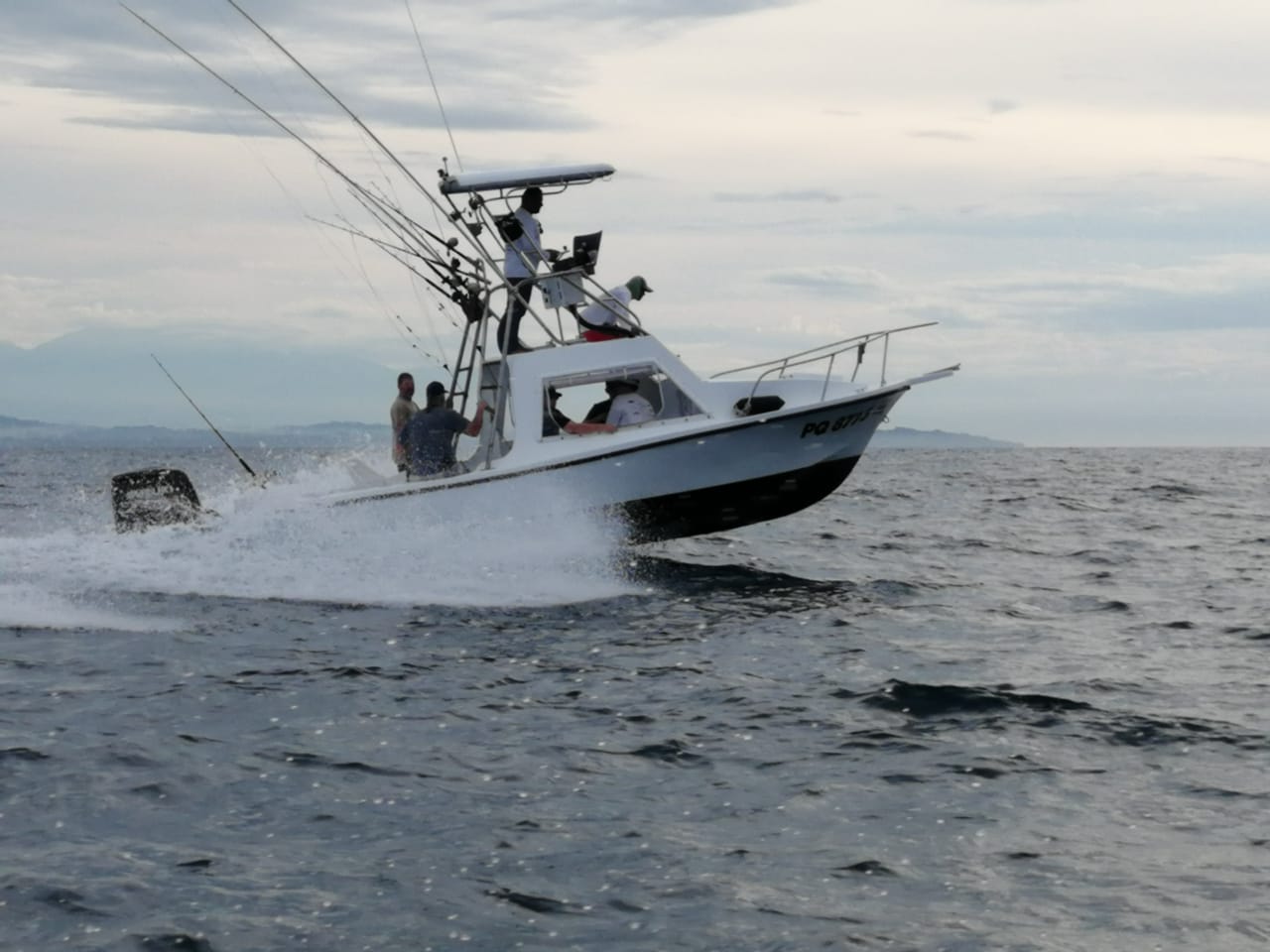
The best method depends on depth, current, bait and how tightly fish are holding to structure. Captains often combine techniques during the same trip.
Available baitfish can be presented close to reef edges, rock and current breaks where larger snapper ambush prey.
Weighted natural bait reaches deeper ledges and hard bottom. Tackle must be heavy enough to turn fish away from cover.
Metal jigs work through the water column and allow active anglers to probe deeper reef and structure.
Poppers, stickbaits and diving plugs can produce explosive strikes around shallow rocks and feeding fish.
Snapper can be targeted throughout the year. May through November is often a productive planning window on Costa Rica’s Central Pacific, although each species and fishing zone responds differently to rainfall, bait, tide, current and water clarity.
The captain’s recent local information is more useful than a rigid calendar. In some periods, a favorable tide or bait concentration can matter more than the month itself.
Ask About Your DatesCracks, boulders and reef edges provide ambush points and immediate cover after the bite.
Depth changes and bottom transitions can concentrate bait and deeper-water snapper.
Juvenile and smaller snapper species may use protected coastal habitat and mangrove-influenced water.
Snapper do not need a long run to cut line on rock. A balanced setup, properly adjusted drag and quick pressure help keep the fish away from cover.
The captain and mate can see the line angle and may ask you to reel, lift or move quickly.
Avoid giving the fish slack, especially while it is close to the bottom or rock.
Line, leader and drag should match the target size, depth and structure—not only the angler’s preference.
A practical option when productive structure and fresh bait are close to the departure area.
Allows time to collect bait, try several structures and adjust to tide or current.
A full day can give the crew more freedom to combine reef fishing with live-bait work for roosterfish.
Yes. Several Pacific snapper species can be targeted throughout the year, with many anglers considering May through November a productive general planning period.
No. Pacific red snapper is Lutjanus peru. Northern red snapper, Lutjanus campechanus, is an Atlantic and Gulf of Mexico species and is not the correct identification for Pacific Costa Rica.
Crews may use live baitfish, cut bait, squid or other locally available bait. Jigs, poppers and plugs are also effective in the right depth and conditions.
It can be when suitable structure and bait are nearby. A full day provides more time to try different depths, structures and tides.
Yes. Crew guidance is important because the first run can be fast and powerful. Beginners should follow instructions and keep steady pressure on the fish.
Some legal snapper may be retained, depending on correct identification, size, current regulations and the captain’s judgment. Never assume every fish can be kept.
No. Fish movement, bait, tide, weather and ocean conditions affect every trip. The crew will use current information to select the most practical areas and methods.
Send your preferred date, number of anglers, hotel and experience level. We will compare practical inshore boats and explain current rates, capacity and inclusions.
Mention “snapper,” your preferred trip length and whether you want to combine it with roosterfish or another inshore target.